Transforming lives through philanthropy
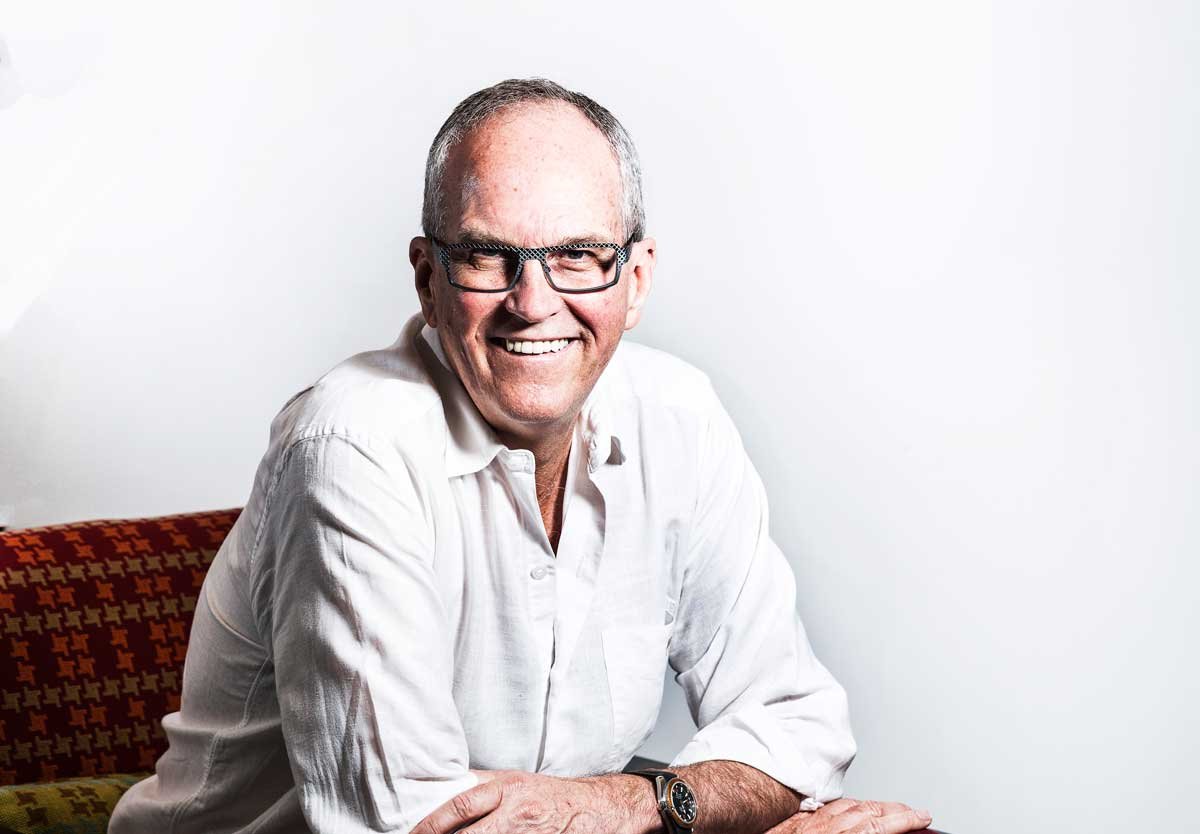
Allan English AM, Chair Queensland Social Impact Advisory Roundtable
Forty years ago, Allan English saw a gap in the hospitality-equipment funding market and founded Silver Chef. It would go on to list on the ASX, win B-Corp accreditation and support thousands of cafes, restaurants and start-ups across Australia’s SME sector.
Allan realised that many hospitality businesses fell outside traditional lending guidelines. So, he pioneered the ‘rent-try-buy’ model for commercial kitchen equipment, allowing businesses to rent equipment with the option to buy it later, ideal for those trying to preserve cash while growing.
Silver Chef expanded across Australia and into New Zealand and Canada and has helped around 100,000 small and medium businesses in the field to start and grow.
In 2010 Allan created the English Family Foundation to support local and international social entrepreneurs to create change in their communities.
He’s now recognised as one of Australia’s leading philanthropists: having served on the councils of Philanthropy Australia and Opportunity International, the boards of the School for Social Entrepreneurs and Karuna Hospice and chaired The Funding Network, among many other roles.
In 2020, he was named a Member of the Order of Australia in 2020 for his contribution to philanthropy.
Allan English spoke to Generous You about the power of philanthropy.
“I had worked hard and I had a capital event. I asked myself a big question: ‘Why are you trying to make more money?’ If you're just going to make more money for money's sake, that's a bit of a hollow existence.
“When I talked to one of the woman two years later and asked what’s changed in your life? She said: “Well, I’ve got a roof over my head that doesn’t have a hole in it anymore during the wet season and I’ve now got two kids at school.”
“I started donating to charity and then I was asked to be a volunteer for a charity called Opportunity International, which was all about microfinance for women in the developing world to transform their lives. I started fundraising with them, went for a visit and was blown away with what you could do with two hundred bucks. It was enough to start a small business in a developing country.
“When I talked to one of the women two years later and asked what's changed in your life? She said: “Well, I've got a roof over my head that doesn't have a hole in it anymore during the wet season and I've now got two kids at school.” And I thought gee whiz two hundred bucks could change two generations of lives! So that's where the spark came.”
The call of philanthropy
Allan began meditation and studying the great philosophers and decided to incorporate philanthropy in his business.
“My summary position was that the secret of having a happy life is: one, to love and to be loved and to live a life to be of benefit to another. They were the three key themes of all the major religions.
“I always had a view that I owned the business, the business never owned me. So I thought how do I reshape my business to make it more meaningful, to align with my inner dimensions of how I was seeing the world?
“So therefore, we set up the foundation to do 40% of its grant making to be poverty alleviation in the developing world, the microfinance work that we were doing, and 40% to go into social enterprise to develop up the social enterprise sector and 20% went into a family fund.
“That meant that each of the kids got their own budget that they could use for any project that they felt was going to change the world. It gave them a chance to follow their own individual passions and they would share it with the rest of the family.
“So guess what? You're getting to see deep insights into your kids about what's really important to them. So you have rich conversations. These are the sorts of conversations families need to have, particularly when you're talking about money.”
“You’re not all about just the returns on funds under management every year, because, if you’re on a ‘digital funds under management’ status, it’s a highly stressful way of living. ”
The role of advisor
Allan English is a firm believer in the role of financial advisors in philanthropy, particularly in guiding the structuring of family giving. And he’s convinced that advisors should look at incorporating philanthropy in their client strategies as a prudent investment in the future of their practices.
“It's a client retention strategy. It's a way of ensuring that you're building your clients’ relationships for the long term. You're not all about just the returns on funds under management every year, because, if you're on a ‘digital funds under management’ status, it's a highly stressful way of living.
“Whereas, if you build deep relationships, you not only form some extraordinary friendships out of the process, but most importantly, you're creating social impact yourself through the good work that you're doing.
“I think the advice I'd be giving financial advisors is that bringing families together around wealth and recognizing that the expression of money into society in a positive manner builds the children's trust in the advisor network to stay with them.”
Key issues
Early in his planning for his family foundation, Allan became aware of three key problem areas he was determined to avoid: lack of transparency between the patriarch and the heirs; poor communication about the extent of family wealth and its implications; and lack of preparation for the heirs.
He believes it’s critical for financial advisors to engage with the whole family or risk being left out if there’s a generational transition.
“I found a very good consultancy company that helped me put all that family council structure together and it worked very, very well. The role of the financial advisors in this is very, very important because people of wealth will listen to financial advisors and be guided by their insights.
“There’s not enough good stories out there about people who are genuinely transforming our communities. And it’s not just the funders that are doing it, it’s our partners that are doing the execution, part of other real heroes. ”
“But one of the key missing pieces is the family aspect because advisors tend to focus on the creators of the wealth. They think: ‘These are the decision-making processes and these are the people I need to keep happy. I've got to deliver my financial return to make sure that I keep the business, keep the funds under management is what they get. The reward structure is all about this.
“But Gee Whiz, I've seen a number of times where the patriarch dies and the kids come and take the money out of the fund manager and take it to somewhere else. Why? Because the fund managers weren't engaging the kids.”
Transforming communities
Allan also points out that Australia has substantial ground to make up in the philanthropy field when compared to many other nations.
“I'm a little bit embarrassed, to be honest. We've got 2250-odd private auxiliary funds in Australia. Independent research has shown we should have 25,000 private auxiliary funds. That's how far behind the ball we are, all right?
“There are not enough good stories out there about people who are genuinely transforming our communities. And I’m not just talking about the funders, I’m also thinking about those who are doing the work on the ground. They are some the other real heroes.
“We need help from those financial advisors that are currently having conversations with their clients. And you don't have to be $10 million or $20 million. You can set up a sub-fund at a community foundation for 10 grand. Get them started early, don't leave too late.”
The future of philanthropy
Allan sees financial advisors as key players in supporting the growth of Australian philanthropy, while simultaneously future-proofing their own practices.
“The kids in families of wealth look at the patriarch or matriarch, the creator of the wealth, and they start getting misinformed world views about what money means.
“What I found I needed to do, was make sure my kids deeply understood that money can be used as a force for good. And the way I did that was every Christmas school holidays, I took my kids backpacking through the developing world to show them that what we have is not represented everywhere, but you can use money to transform the lives of those individuals.
“How do I make sure that I retain this client in 10 or 20 years time? Because this client is going to die. And how am going to make sure that I retain this client for the longer term? ”
“So, when financial advisors give advice to your clients about establishing a family foundation you are creating the opportunity for the kids to step in to understand how the power of money can be used in a positive light. The beautiful part about it is you have really rich and unique conversations with your kids.
“Above all though, I would be calling this a client retention strategy. How do I make sure that I retain this client in 10 or 20 years time? Because this client is going to die. And how am going to make sure that I retain this client for the longer term?
“Once you got them with a foundation under the belt, you're sitting around the table when it comes to the their kids knowing exactly where they're at in life's journey. You ain't going to lose the business very quickly, mate. That's the bottom line to it. So think about it as a client retention strategy.”